
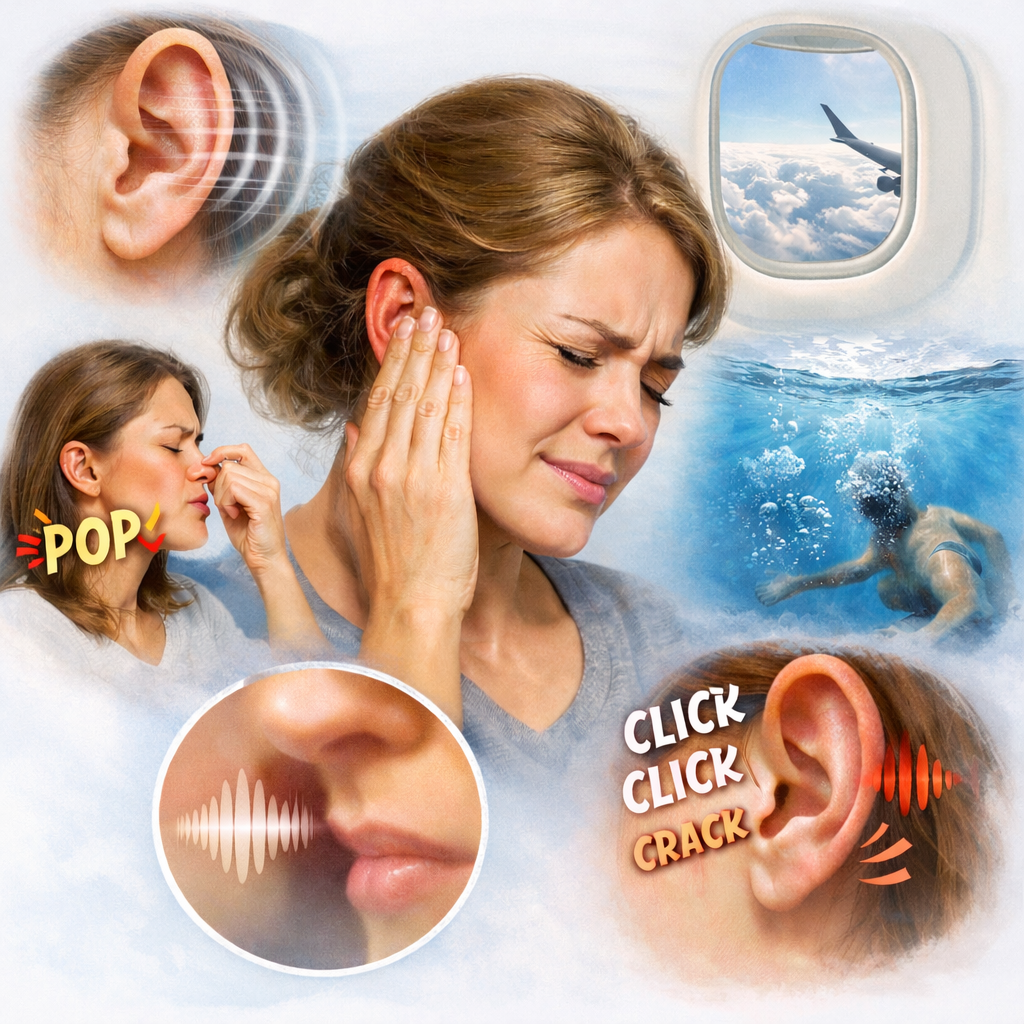
Does your ear feel blocked, as if you were underwater? Do you notice popping or clicking when you swallow or yawn, but the pressure isn’t clearing?
A blocked ear can be uncomfortable, distracting, and sometimes worrying. Many people experience it after a cold, during allergy season, or following a flight. While it’s often harmless, a blocked ear that doesn’t improve can be a sign that something needs checking.
Let’s break down what’s going on, what might be causing it, and when you should get your ears checked.
What Does a Blocked Ear Actually Feel Like?
The feeling of a blocked ear might seem obvious, but people can often experience it in different ways. Depending on your exact situation, it could feel a little different, with some of the more common descriptions of it being:
- A full or pressured feeling in one or both ears.
- Muffled or reduced hearing.
- Feeling like your ear needs to ‘pop’ but doesn’t.
- Clicking, cracking, or popping when swallowing.
- A sensation like being underwater or on a plane.
These feelings can come and go at any point, but they can occasionally linger. If they last quite a while, it might be an indication that there’s something else at play.
Common Triggers for a Blocked Ear That Won’t Clear
A blocked ear is often linked to pressure changes or congestion around the ears. A few underlying issues could trigger this, with some of the more common including:
- Colds and Flu – After a cold or viral infection, swelling and mucus can affect the ear’s ability to regulate pressure.
- Allergies – Hayfever and other allergies can cause inflammation in the nose and sinuses, which can also affect the ears.
- Sinus Congestion – Blocked or inflamed sinuses can interfere with normal pressure in the ear.
- Flying or Altitude Changes – Taking off, landing, driving through hills, or even diving can cause pressure changes that some ears struggle to cope with.
When these issues are treated, the blocked ear sensation should go away. But, that doesn’t mean it’ll always ‘pop’ the way many people might expect.
Why Your Ear Wouldn’t ‘Pop’
Inside your ear is a small passageway that helps balance pressure and drain fluid. This passage connects the middle ear to the back of your nose and throat. When everything is working normally, swallowing or yawning helps this passageway open briefly, equalising pressure. This causes the ‘pop’ many people experience.
When this passage becomes swollen, blocked, or doesn’t open normally, pressure can build up. This leads to fullness, muffled hearing, and that frustrating feeling that your ear isn’t clearing. This is a condition known as Eustachian Tube Dysfunction.
What is Eustachian Tube Dysfunction (ETD)?
The Eustachian tube is a narrow tube in your ear that:
- Equalises air pressure in the middle ear;
- Lets fluids drain from the ear, and;
- Helps you hear clearly.
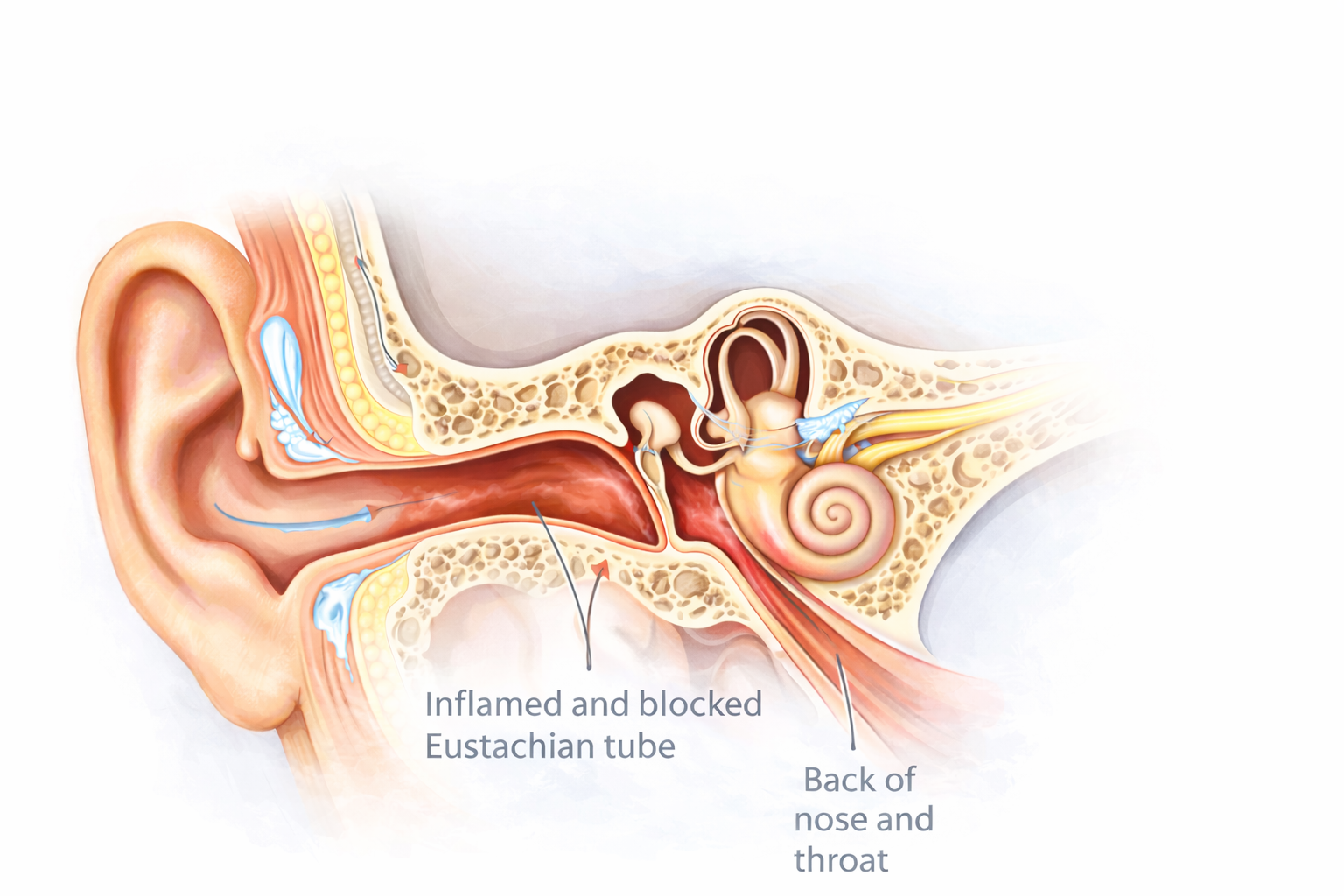
When the tube isn’t working well, often because of inflammation and similar factors, pressure can’t equalise properly. This often results in several symptoms, like:
- Persistent ear pressure or fullness.
- Muffled or dulled hearing.
- Clicking or popping sounds.
- Symptoms that worsen with flying.
ETD is common and usually clears up quickly, but it can be quite uncomfortable.
Is Your Blocked Ear Earwax, ETD, or an Infection?
Different cases of blocked ears can be difficult to tell apart unless you’re a trained expert. There are noticeable differences, though. ETD usually involves muffled hearing, for example, while an earwax blockage would involve gradual hearing loss. Know the key differences so you know what to do.
When You Should Get Help
Most of the time, you wouldn’t need any professional help when you have a blocked ear. It might be uncomfortable, but it should clear up quickly. But, there are specific instances when you’ll need to see a professional. These include:
- Your blocked ear lasts longer than one or two weeks.
- You have vertigo all of a sudden.
- Flying made the symptoms noticeably worse.
- The pressure isn’t improving or is getting worse.
- You have a lot of pain, discharge, or a fever.
- You experience sudden hearing loss.
If you experience any of these symptoms, seek professional assistance quickly, especially if you’re experiencing several of them.